


Major sporting events present opportunities for many businesses, particularly those who have lucrative official sponsorship packages. Businesses that do not pay for these packages will also seek to exploit the tournament, hoping to capture the same goodwill as the official sponsors without the hefty price. This is often referred to as ‘ambush marketing’.
The organisers of major events are keen to ensure that (rightly or wrongly), the main event sponsors enjoy as much exclusivity as possible and minimise the impact of ambush marketing. With the FIFA World Cup upon us, this article explores the steps taken by the host nations and FIFA to police branding an marketing during the tournament.
What is ‘Ambush Marketing’?
Official sponsors of major sporting events invariably pay huge sums of money for the associated privileges. Such privileges include being able to display their branding alongside official tournament insignia/trade marks as well as in and around event stadia. Understandably, such sponsors expect a return on their investment and are keen to prevent their competitors from free riding on the goodwill generated by such tournaments.
‘Ambush marketing’ essentially describes marketing that creates an association with an event without there being any specific sponsorship arrangement, capitalising on the publicity of the event without paying for official sponsorship. Historically, such marketing has escaped the grasp of IP law by avoiding the use of any registered trade mark rights (instead using generic/common words and ‘themes’ that would allude to an event) and by using stealthier marketing techniques, such as organising promotions within event stadia (or within the vicinity) or running sporting ‘themed’ advertising.
Some of the best examples include:
Nike Atlanta 1996 Olympics – Reebok were the official sponsors for the event, which was ‘ambushed by Nike who purchase billboards around the city and within the vicinity of stadia. The record-breaking sprinter Michael Johnson was given a special pair of Nike trainers with golden spikes. The cumulative effect of these efforts leads many to falsely believe that Nike was an official sponsor.
Qantas Airlines Sydney 2000 Olympics – Ansett were the official airline sponsor of the event but were challenged by Qantas’ aggressive marketing strategy around the event. Qantas’ efforts included running special ‘Olympic’ discount promotions with adverts featuring Australian athletes. A poll amongst consumers at the time suggested that more people thought Qantas was an official sponsor as opposed to Ansett. Ansett sued Qantas before reaching an undisclosed out of court settlement. Ansett ceased to exist by 2002.
Paddy Power London 2012 Olympics – To coincide with the 2012 Olympics, Paddy Power ran a promotion campaign with the strapline “OFFICIAL SPONSOR OF THE LARGEST ATHLETICS EVENT IN LONDON THIS YEAR”, with the caveat “(AHEM, LONDON FRANCE THAT IS)”. Rather than being a sponsor the Olympic games, Paddy Power had sponsored an egg and spoon race in a small agricultural village in France (called London). The London Olympic Committee sent a stern letter to Paddy Power but ultimately elected to take no further action.
The risk of ambush marketing threatens to seriously devalue official sponsorship packages, making them less attractive and less lucrative to potential sponsors. Event organisers therefore not only take care to safeguard the more traditional forms of IP (i.e. their branding and tournament insignia) but have also taken steps to minimise the risk posed by ambush marketers.
Such steps include contractual control through ticketing terms/conditions, warnings to and obligations placed on athletes/competitors, and ‘event specific’ legislation directly countering ambush marketing (such as at the Sydney 2000 and London 2012 Olympics).
FIFA’s Legal Armory
Much like the Olympics, FIFA World Cups have also been a prime target for ambush marketers. Consequently, FIFA takes the protection of its sponsors interests very seriously.
A. Trade mark portfolio
FIFA has an extensive trade mark portfolio which it details in its Intellectual Property Guidelines. FIFA asserts that they have trade mark rights (some registered, some not) in several slogans and logos, including (but not limited to):
-
- FIFA World Cup 26
- FIFA World Cup
- World Cup
- FIFA
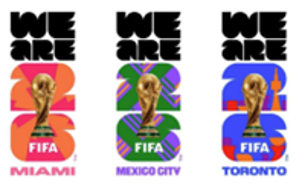
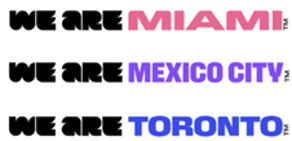
FIFA also asserts to have copyright and design rights in their ‘Official Typeface”. The non-exhaustive list of terms/designs for which FIFA asserts to have rights is contained within their IP Guidelines.
Whilst the enforceability of some of these rights is questionable, it is advisable to stay well clear of any of the terminology and designs above. FIFA has rights spanning across most jurisdictions in the world, meaning that business in all jurisdictions must take great care with their advertising during the event.
B. Contractual and regulatory control
FIFA’s ticket terms and conditions are expressly designed to try and prevent ambush marketing, with Clause 16.2 stating:
“Ticket Holders are strictly prohibited from conducting any activities in or around the Stadium, on behalf of themselves or any third parties which, in FIFA’s opinion, may directly or indirectly create a commercial association between (on the one hand) the Ticket Holder or a third party and (on the other hand) FIFA, FIFA Ticketing, the Competition (or any part of it) or FIFA’s commercial affiliates without the authorization of FIFA, whether by way of an unauthorized use of logos or otherwise (“Ambush Marketing”). Ambush Marketing includes, without limitation, marketing, sales, product or sample distribution as well as any promotional or advertising activities of any kind, including wearing, possessing or holding promotional or commercial items without the authorization of FIFA. Such items may be confiscated by FIFA, FIFA Ticketing or Stadium authorities without compensation to the Ticket Holder.”
As such, any ticket holder (i.e., any person with a ticket for a match, but it purchased by them or transferred to them), will be bound by these terms above. The term appears to be deliberately flexible, giving FIFA great scope to decide whether or not an activity could create ‘commercial association’.
Indeed, FIFA has a track record of enforcing these terms against ticket holders; for example, in 2010, a group of women were ejected from a stadium for wearing matching orange tops, which FIFA deemed to be a covert attempt to advertise a Bavarian beer (thus undermining the official sponsor, Budweiser).
It is already public knowledge that Toronto and Vancouver will enforce brand ‘exclusion’ zones around event stadia, apparently as part of the deal with FIFA to secure hosting rights, to ensure that only sponsor branding will be visible within the immediate vicinity.
C. Equipment and clothing control
FIFA’s Regulations strictly control the equipment and kit that can be used by participating teams/footballers. Clause 28.5 states:
The regulations go on to state that FIFA will initiate ‘disciplinary proceedings’ against any Participating Member Association that does not comply. As a consequence, any participating member (or individual affiliated with a participating member) should not entertain any request to wear kit or use equipment that is not authorised by FIFA.
Legislative position
Ordinarily, major tournaments such as the Olympics and the World Cup are hosted in one jurisdiction, making it somewhat easier to define the legislative framework and the red lines.
The picture this summer is somewhat complicated by the fact that the World Cup spans across three separate jurisdictions, each of which have their own legal frameworks. Any business looking to advertise directly in the host nations during the tournament should take note of the legal framework within each jurisdiction.
USA/Canada
Neither the USA nor Canada have taken the step to enact any specific legislation per se, albeit any use of the ‘official’ terminology/designs above would no doubt prompt FIFA to take action under local trade mark laws.
Furthermore, it is likely that most (if not all) host cities will enforce ‘clean branding’ zones in and around event stadia (Seattle, Toronto and Vancouver have all already published guidance).
Mexico
As a direct consequence of being one of the hosts, Mexico has amended its trade mark law to prohibit “carrying out, in the course of industrial or commercial activities, acts that cause or induce the public to confusion, error, or deception, by making it believe or wrongly assume… the existence of an official sponsorship relationship between a trademark and a public or private mass event.”
In effect, Mexico has taken the step to explicitly prohibit ambush marketing within its existing IP framework. The terminology used is extremely broad and could capture an array of different ‘ambush’ activities.
Practical Tips
The matrix of FIFA and host nation regulations presents a major challenge for any non-official event sponsor looking to capitalise on the goodwill generated by the event. Below is a practical list of what to do, and what not to do.
1. Avoid using ‘official’ FIFA terminology and designs
Stay well clear of any of the ‘official’ FIFA terminology, including their registered and unregistered trade mark rights. Whilst the enforceability of some of FIFA’s rights is questionable, FIFA have a track record of robustly defending all of their rights.
Businesses should also not use any terminology that directly or indirectly suggests an official relationship (i.e. ‘official sponsor’, ‘partner of’ etc).
2. Do not use event tickets for commercial purposes
Using World Cup tickets for commercial purposes is strictly prohibited. This includes using tickets for any advertising activities during the ticketed event or using the tickets per se as a promotional item. Such activities should not be conducted without FIFA’s authorisation.
3. Keep marketing generic
Any marketing conducted around the event should be kept very generic. Allusive references to football/soccer and generic football imagery (i.e. footballs, nets, pitches, plain-clothed football supporters, unbranded/non-world cup specific stadia etc) will be acceptable.
Particular care needs to be taken when advertising in the home nations, where FIFA will be exceptionally keen to stamp out any activities they feel are a detriment to their official sponsors.
If in doubt, advice should be taken from an IP attorney.