 Introduction
In a relatively short space of time, ‘veganism’ has transformed from being a niche lifestyle to a mainstream one. The change of attitude is largely down to a more animal and environmentally conscious generation turning away from meat/dairy-based products. Consequently, there has been an exponential rise in the number of vegan products available to consumers.
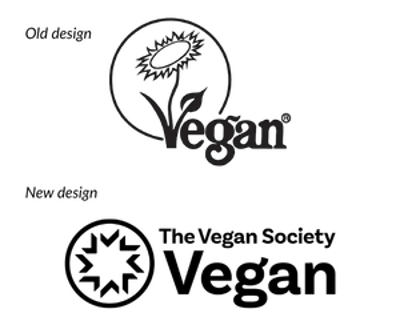
The Vegan Society is the oldest vegan organisation in the world and claims to be the ‘original’ vegan certification scheme. They own ‘traditional’ registered trade mark rights for their old logo dating back to 1990, which they have licensed to third parties that comply with their own ‘vegan’ standards.
However, it recently came to light that The Vegan Society has filed to protect their new logo as a ‘certification mark’, a lesser-known category of trade mark right in the UK that seek to guarantee standards rather than commercial origin.
This article explores this unusual and nuanced type of trade mark right.
What are certification marks?
A certification mark is a specific type of trade mark that provides a guarantee that the goods or services bearing the mark meet a certain defined standard or possess a particular characteristic. The owner of the mark will define those standards or characteristics.
Similarly, a collective mark is a specific type of trade mark which indicates that the goods or services bearing the mark originate from members of a trade association, rather than just one trader.
Section 50(1) of the UK Trade Marks Act 1994 (the Act) defines a certification mark as:
“a mark indicating that the goods and services in connection with which it is used are certified by the proprietor of the mark in respect of origin, material, mode of manufacture of goods or performance of services, quality, accuracy or other characteristics”
The main feature of a certification mark that distinguishes it from a ‘traditional’ trade mark is that it is used not by the proprietor of the mark but instead by his authorised users for the purpose of guaranteeing to the relevant public that goods or services possess a particular characteristic and/or comply with a particular set of standards. The proprietor’s mark certifies the presence of the characteristic and will authorise the use of the mark to anyone who can demonstrate that the goods and services for which it will be used have that characteristic.
The following are examples of certification marks in the UK:
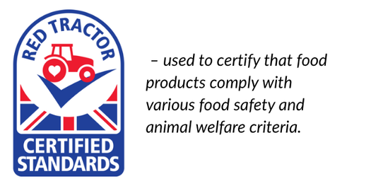
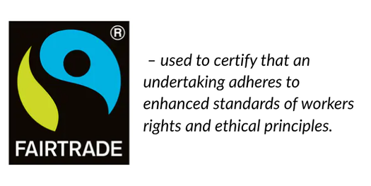
Essentially, certification marks are a stamp of quality and assurance for consumers. The key distinction is that certification marks distinguish goods/services that are/are not certified rather than distinguishing between different undertakings like traditional trade marks.
Who can apply for a certification mark?
In theory, any legal entity can apply for a certification mark, albeit typically applicants are trade associations or other similar bodies who have an interest in monitoring and maintaining standards in a particular field.
The proprietor of a certification mark cannot be engaged in the supply of the goods being certified. The UKIPO will not ordinarily investigate the proprietor’s position in the market but could be challenged by a third party later down the line if it transpires that this requirement is not met. However, the UKIPO will raise an objection if the proprietor already has registered trade mark rights and it is within their discretion to query whether a particular proprietor is competent to certify the goods/services in question.
How are certification marks examined?
As with ordinary trade marks, certification and collective marks will be examined by the UKIPO against the absolute grounds for refusal contained in Section 3(1) of the Act, i.e., they must not be descriptive or non-distinctive and must be capable of performing a distinguishing function. Simple descriptive/non-distinctive terms will not be accepted as certification marks as there is an overriding interest in keeping such terms free to use by all.
For example, “100% denim guaranteed” would not be an acceptable certification mark for clothing, as it is a mere descriptor that does not indicate that a certification scheme is guaranteeing the presence of the characteristic. On the other hand, “Denim Assured 100% denim guaranteed” would be acceptable as the additional matter (the word “Assured”) ensures that it has the capacity to distinguish goods that have been certified from those that have not.
Beyond the requirements of Section 3(1), there is also a requirement to provide clear regulations that will set out how the use of the certification mark will be governed. These regulations are open to public inspection so that any undertaking intending to make use of the mark can easily access the relevant information and can understand the requirements that must be met to use the certification mark. The regulations must clearly stipulate:
1. Who is authorised to use the certification mark
The regulations must state who is free to use the certification mark. This may be everyone who meets the specific criteria, but if the certification mark is only to be used by certain types of persons/entities this needs to be clearly defined.
2. The characteristics to be certified by the certification mark
Most importantly, the regulations must set out what particular relevant characteristic is being protected. This must be publicly available, clear, and objective, enabling anyone reading them to know precisely what characteristic is being certified.
The UKIPO are under a duty to ensure that these regulations are not contrary to public policy, unduly restrictive or anti-competitive.
3. How the certifying body is to test those characteristics and monitor the use of the certification mark
Details must be provided as to the testing regime that will be present and who will be responsible for this testing (be it the proprietor or another person/entity). The UKIPO needs to be satisfied that the testing regime is sufficiently robust so that consumers can have confidence in the integrity of the certification scheme.
4. What fees are required (if any)
Details of fees payable (if any) must be provided, enabling prospective users of the certification scheme to understand the costs involved. Fees must not be excessively high so as to restrict access to the scheme and should be proportionate to the nature of certification necessary.
5. Procedures for resolving disputes
Finally, there must be a means by which a decision by the proprietor to allow (or not allow) a particular person/entity to use the certification scheme can be challenged. Typically, this would be an appeal mechanism involving an independent body such as a tribunal or specialist arbitrator.
Why the Vegan Society have filed for a certification mark and what challenges they may face
The Vegan Society’s press release states that they wish to update and modernise their imagery whilst bringing it into line with the new EU ‘greenwashing’ directive. Whilst the directive contains stipulations regarding ‘green’ claims (discussed in our previous article), it also tightens up regulations regarding third-party certification schemes.
As a consequence, the certification mark application has been filed in order to bring the vegan society’s certification scheme in line with the new directive. Logically, one would assume they will take the same steps in the EU – the EU certification mark regime largely mirrors the UK scheme.
Assuming that their application is accepted, consumers who are confronted with the certification mark can be assured that the product/service that they are buying complies with a defined and approved set of standards. Furthermore, the scheme should make it easier for third parties to access and use the certification mark, given that a certification mark does not require individual licenses (as is the case with traditional trade mark rights) and can be used by anyone who satisfies the requirements of the scheme.
Nonetheless, on first inspection, the vegan society’s UK certification mark application could encounter some difficulties. The Vegan Society’s historic trade mark rights still appear as registered on the UKIPO trade mark register, meaning that these could pose a bar to their certification mark application unless they were surrendered in the meantime.
Furthermore, their certification mark application covers all 45 Nice classes, some of which appear to be relevant and others less so (for example, ‘mining extraction’ is covered by the application). Inevitably, the UK Examiner will query the necessity and proportionality of covering such an array of goods/services. It would appear unlikely that there would be a genuine intention to use the certification mark for all 45 classes, and expense could have been spared by narrowing down the application accordingly.
Concluding remarks
Assuming that the Vegan Society’s application is accepted in some form or other (be it for all or only some of the goods/services applied for), consumers who are confronted with the new certification mark can be assured that the product/service that they are buying complies with a defined and approved set of standards that have been scrutinised by an independent body. Likewise, an approved certification mark scheme should make access to the use of the new certification mark easier for anybody that wishes to do so. In the meantime, it remains to be seen to what extent the new certification mark is registered.
*Use of logos and images in this article is for commentary and analysis only.